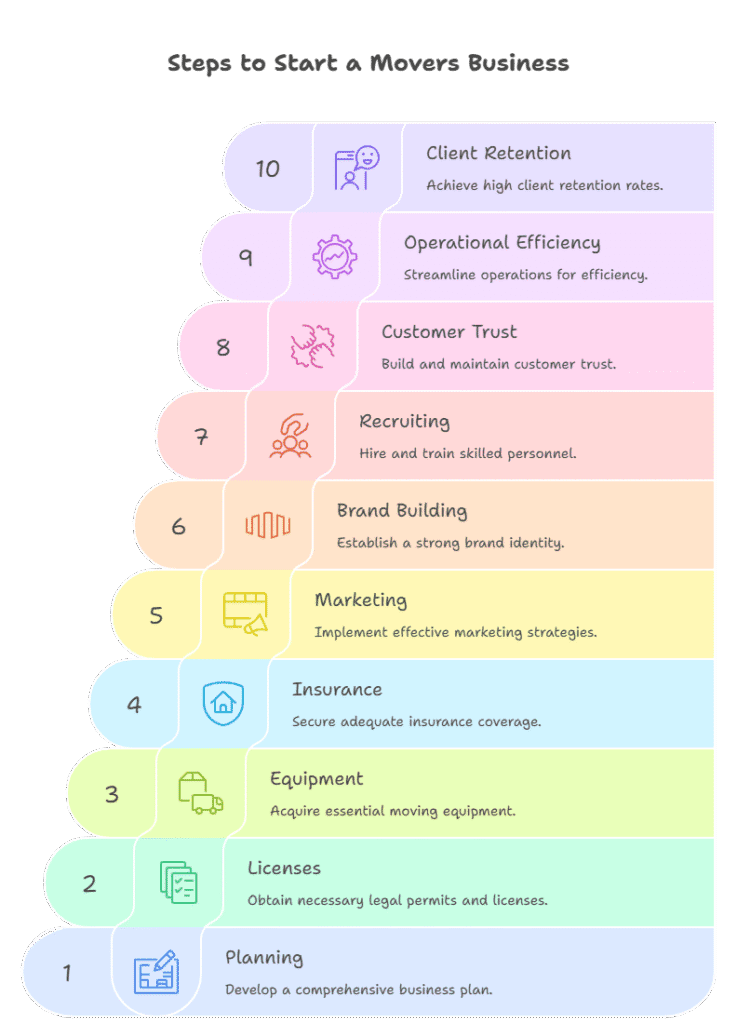
If you have ever looked at a moving truck thinking, “That could be me helping people start fresh,” you are already halfway there. Learning how to start movers and packers business with planning, licenses, equipment, insurance, and marketing. But wins will be secured in the details. From brand-building through recruiting trained personnel, establishing customer trust, to attaining operational efficiency, only one objective remains: providing a reliable and seamless moving experience that earns client retention and referrals.
Begin with Vision: Defining Your Moving Model
Before you even think of buying a truck, you need a plan — a clear vision of what kind of moving business you want to run.
Are you into local residential moves, office relocations, and long-distance moving? Do you want to specialise in downsizing for seniors, high-end packing, or carrying delicate goods?
Is it going to be a small operation, therefore, just a van and two movers, or will you start with several crews and commercial-grade trucks? Having this considered early on will help you allocate your funds well and work well with marketing and brand image.
Also, map your service area: Will you serve one city, multiple regions, or offer inter-provincial moving? Defining your geographic coverage keeps your logistics efficient and profitable.
Market Research: Know the Ground You’re Moving On
A mover and packer’s business thrives on trust and timing. Conduct a quick feasibility check by looking into:
- Housing and rental trends: Is your region growing with new residential developments or businesses relocating?
- Competitor analysis: Identify local moving companies, compare their pricing, and spot service gaps.
- Customer expectations: Do people in your area value speed, affordability, or white-glove service?
Actually, these are the factors that can aid when structuring your pricing scheme, sectioning yourself off somehow with guaranteed quotes, real-time tracking, or maybe same-day local jobs.
Building a Solid Business Plan
A good business plan is your road map — it answers how, when, and where you’ll operate. Include the following key elements:
- Services Offered: What will be the different types of services rendered — packing, loading, transportation, storage, unpacking, etc.
- Target Market: Will it be homeowners, students, offices, or commercial clients?
- Startup Costs: Purchase of vehicles, a fuel budget, necessary equipment, obtaining licenses, insurance coverage, salaries for staff, and marketing expenses.
- Revenue Projections: Estimate the average size of a job and the number of bookings per month.
- Funding Options: Saving money from one’s personal account, going for a business loan, leasing equipment, or finding investors.
This document doesn’t just help you plan — it helps you secure funding and stay organised once the boxes (and bills) start piling up.
Legal and Regulatory Setup
No matter how small your moving business starts, legality matters. Register your business under a structure that fits your goals — sole proprietorship, partnership, or corporation.
You’ll need to:
- Register your business name with your province or municipality.
- Obtain a business license and, if applicable, a carrier license for inter-provincial operations.
- Secure a Commercial Vehicle Operator’s Registration (CVOR) in Ontario or an equivalent permit elsewhere.
- Register for GST/HST with the CRA.
Legal operations build trust-especially when your clients can see their website address and insurance details on your website and trucks.
Protecting What Matters: Insurance Essentials
Every mover’s nightmare is an instance of a dropped television or a scratched floor, without coverage! Hence, comprehensive insurance means more than just protection; it denotes professionalism and reliability. Moving businesses should completely cover the basics: Commercial Vehicle Insurance for trucks and vans; Cargo Insurance or Transit Insurance to cover the clients’ goods in transport; and General Liability for any inadvertent damages or injuries.
While the Workers’ Compensation Coverage concerns the safety of employees. These mutual policies would not only cover your business from financial risks but also send a statement to your clients that you rightfully value their belongings and conduct your business with integrity and accountability.
Equipment and Infrastructure
Now comes the fun part — gearing up. You don’t need a fleet of massive trucks right away; even a single well-maintained van or small box truck can kickstart your journey.
Essential tools of the trade include:
- Dollies, hand trucks, straps, and ramps.
- Moving blankets, shrink wrap, and protective padding.
- Toolkits for furniture assembly/disassembly.
- Safety gear for staff — gloves, belts, and uniforms.
If offering storage, the facility must be secure, clean, and climate-controlled. Starting from home or a rented yard, a moving business then flourishes to the level of having warehouses.
Building Your Team and Culture
Even the best truck can’t move without a great crew. Hire people who are physically fit, punctual, and careful. Experienced movers are a plus, but training matters more than experience.
Training your workers in good lifting techniques, packing methods, customer service, and safety standards is a must. A polite and dependable team is your greatest advertisement: the customer remembers the treatment received long after the boxes were unpacked.
A strong culture of accountability, punctuality, and professionalism ensures smoother operations and happier clients.
Branding and Marketing: Standing Out in a Crowded Market

This is where your business comes alive. Your branding should tell customers they can trust you with their life’s belongings.
Create a Memorable Identity
A clean and trustworthy name should be chosen, and a logo should be designed that will look good on your trucks and uniforms. Consistency using your website and business cards through to social media increases recognition.
Go Digital First
Invest in a professional website that showcases your services, licenses, and reviews. Use local SEO to target people searching for movers near them. A well-optimised Google Business Profile can generate free leads every week.
Expand Visibility
Use paid ads in May through September busy moving season-and keep your presence during the off-season through blogging, email, and referral programs.
Being among real estate agents, property managers, and anyone who rents storage space will help you create new clients.
Scaling and Sustaining Your Business
Once your business stabilises, expansion can come naturally. Add a second truck, open in a nearby city, or introduce specialised services like piano moving or corporate relocation.
Use customer reviews as your most powerful marketing tool — one great experience leads to five new referrals.
The beginning of learning how to start a movers and packers business is only halfway through. Consistent operations, buying modern tools, and good quality services are what keep the business going for the longest time.
Final Thoughts: Moving Forward with the Right Partner
Starting a moving company takes strategy, patience, and a strong back — literally and figuratively. Every box moved is a story of someone’s new beginning, and with the right planning, it can also be the start of your success story.
Having gone through it before, No Problem Movers is there for you. In trusted and experienced Brantford movers, with over 20 years’ experience, we’ve truly honed the art of safe, stress-free relocations. Be it office moving, local moving, premium packing, or secure storage, our teams work with professionalism, care, and precision all the way through.
If the thought of setting up your own moving business runs through your dreams, begin by uniting your thoughts on how we work: licensed, insured, professional, and customer-first. The best moving companies are not just big boxes and moving trucks: they are about trust and experience, so as to safely move people forward in their lives.
So when it’s time for your next move — in business or in life — remember, a well-planned journey always reaches its destination.